In today's digital age, where people spend a significant amount of time under artificial lighting, the importance of eye - friendly lighting cannot be overstated. This article aims to provide a comprehensive guide to selecting eye - friendly table lamps, focusing on three core technical indicators: blue light hazards, color rendering index, and color temperature, in line with the national standard GB/T 9473 - 2017.
Blue light is a part of the visible light spectrum, but excessive exposure to high - energy blue light can cause potential harm to the eyes. According to research, blue light with a wavelength between 415 - 455 nanometers is most likely to cause damage to the retina. The blue light radiation of eye - friendly table lamps is classified into different levels according to the standard GB/T 9473 - 2017. For example, Class RG0 indicates that the lamp has no significant blue light hazard, which is the safest level for long - term use. In contrast, higher - level blue light radiation may lead to symptoms such as eye fatigue, dry eyes, and even long - term vision problems.
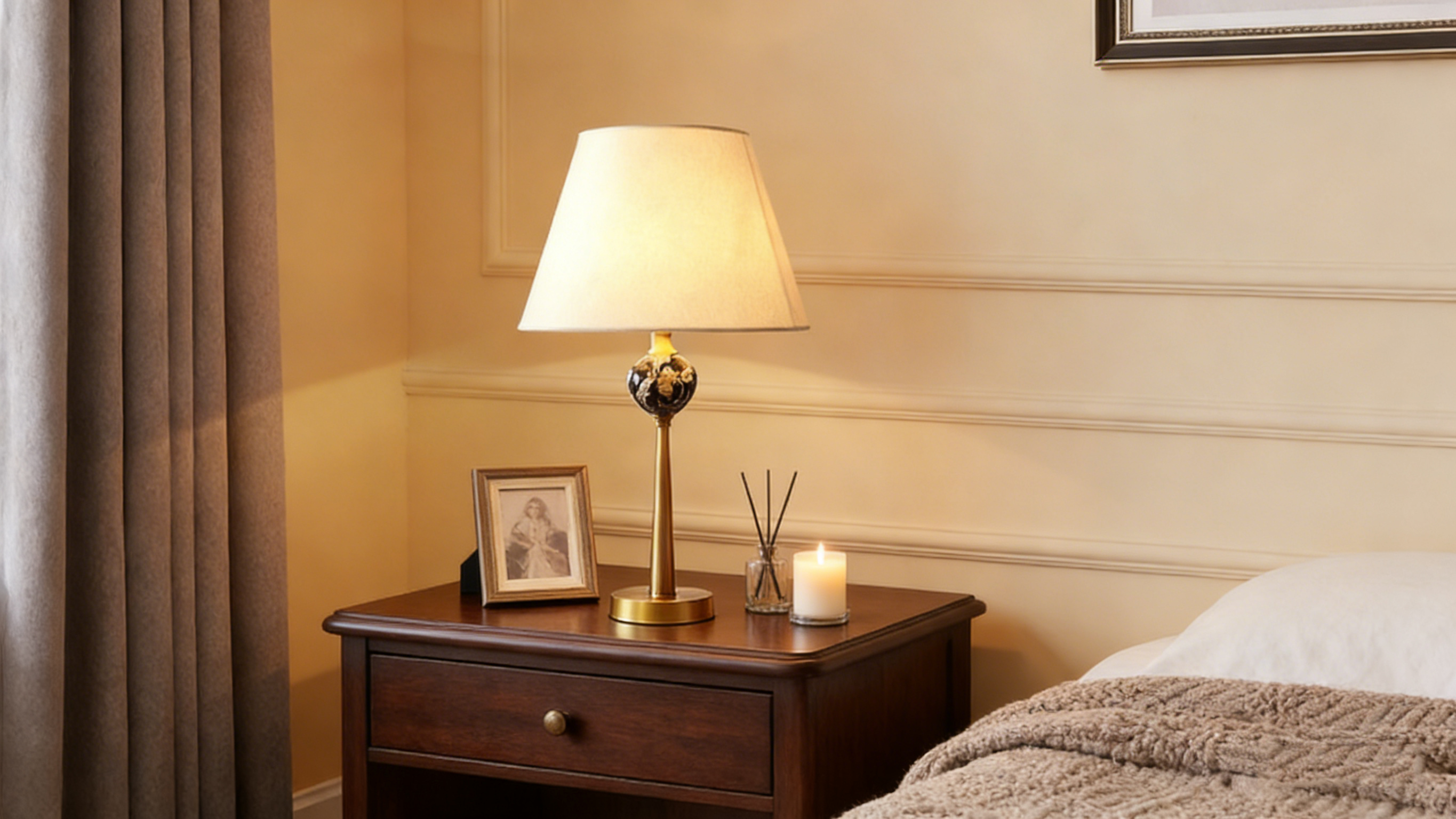
The color rendering index (Ra) measures how accurately a light source can reproduce the true colors of objects compared to natural light. A higher Ra value means that the colors of objects appear more vivid and natural under the light. The standard GB/T 9473 - 2017 recommends that the Ra of eye - friendly table lamps should be at least 90. When Ra is lower, colors may look dull, and it can be more difficult for the eyes to distinguish details, especially in tasks such as reading, painting, or designing. For instance, a lamp with Ra = 95 can make a painting's colors look almost the same as they would in natural sunlight, providing a more comfortable visual experience.
Color temperature is another crucial factor in eye - friendly lighting. Color temperature is measured in Kelvin (K). A lower color temperature (around 2700K - 3000K) produces a warm, yellowish light, similar to the light from a traditional incandescent bulb. A higher color temperature (above 5000K) gives a cool, bluish - white light. Research has shown that a color temperature of 4000K is the most suitable for long - term reading and office work. This natural white light provides a balance between brightness and softness, reducing eye strain and fatigue. According to a study of 500 office workers, those who used 4000K lighting reported 30% less eye fatigue compared to those under higher - or lower - color - temperature lighting.

Different usage scenarios require different lighting conditions. For students studying, a lamp with a wide illumination area, low blue light radiation (RG0), high Ra (above 90), and 4000K color temperature is ideal. This can help them focus better and reduce eye fatigue during long study sessions. Designers, on the other hand, need a lamp that can accurately reproduce colors. A lamp with a high Ra (preferably above 95) and adjustable color temperature can meet their needs for different design tasks. For remote workers, a lamp that can be easily adjusted in terms of height and angle, with proper lighting parameters, can create a comfortable working environment.
Many consumers tend to be attracted by high - brightness or low - price products. However, high - brightness lamps may not necessarily be eye - friendly. Excessive brightness can cause glare, which is a major cause of eye fatigue. Low - price lamps often sacrifice quality, with lower Ra values and higher blue light radiation. By referring to the GB/T 9473 - 2017 standard, consumers can avoid these common pitfalls and make a more informed choice.
Optical experts and vision health experts have emphasized the importance of following the GB/T 9473 - 2017 standard when selecting eye - friendly table lamps. For example, Dr. Smith, an optical expert, points out that "using lamps that meet the standard can significantly reduce the risk of eye problems in the long run." Real - world data also shows that companies that produce lamps according to this standard have seen a 20% increase in customer satisfaction compared to those that do not.
In conclusion, when choosing an eye - friendly table lamp, it is essential to consider blue light hazards, color rendering index, and color temperature, and to refer to the GB/T 9473 - 2017 standard. Our products are designed and manufactured in strict accordance with this scientific eye - protection standard, offering high - quality performance. Click here to learn more about our eye - friendly table lamps and consult our professional services.

 327
|
327
|
 international home textile export standards
ISO 9001 quality management system
Oeko-Tex certification
REACH compliance
CPSC safety regulations
international home textile export standards
ISO 9001 quality management system
Oeko-Tex certification
REACH compliance
CPSC safety regulations
 90
|
LED desk lamp lifespan
heat - dissipation design of LED desk lamp
stability of LED driver power supply
durability of ABS shell
standardization of office lighting
90
|
LED desk lamp lifespan
heat - dissipation design of LED desk lamp
stability of LED driver power supply
durability of ABS shell
standardization of office lighting
 86
|
office lighting ergonomics
adjustable desk lamp
ergonomic lighting design
visual comfort at work
productivity-focused lighting
86
|
office lighting ergonomics
adjustable desk lamp
ergonomic lighting design
visual comfort at work
productivity-focused lighting
 428
|
adjustable desk lamp
ergonomic office lighting
LED desk lamp for eyes
home office lighting setup
posture-friendly lighting
290
|
cotton pillow with quilted pattern
durable home textiles
PP cotton filling pillow
washable pillow cover
towel-style quilting technology
428
|
adjustable desk lamp
ergonomic office lighting
LED desk lamp for eyes
home office lighting setup
posture-friendly lighting
290
|
cotton pillow with quilted pattern
durable home textiles
PP cotton filling pillow
washable pillow cover
towel-style quilting technology